Seasonal wasp activity in Sacramento accelerates from May through October as overwintered queens construct paper comb structures along roof eaves, patio covers, and window framing. According to pest management…
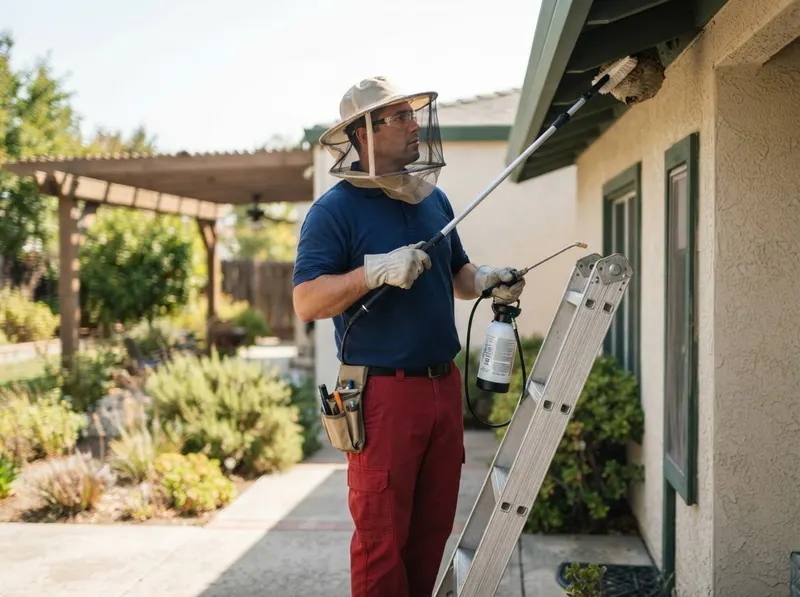
Seasonal wasp activity in Sacramento accelerates from May through October as overwintered queens construct paper comb structures along roof eaves, patio covers, and window framing. According to pest management guidelines from the University of California Statewide Integrated Pest Management Program, yellowjackets and paper wasps present elevated territorial aggression as colony populations peak during late summer heat. Ground-nesting western yellowjackets frequently colonize abandoned rodent burrows near the American River Parkway and irrigated shrub beds in Pocket-Greenhaven and Natomas, posing stings to foot traffic and landscape maintenance crews. Aerial paper wasps routinely anchor umbrellas beneath decorative rafter tails common to historic homes in Midtown, East Sacramento, and Curtis Park, requiring targeted pole-injection equipment to neutralize the comb without dispersing defensive insects into living areas.
Effective removal requires matching specific equipment to the insect species and architectural location. TrueNorth Pest Management applies pyrethrin-based contact flushes registered under the California Department of Pesticide Regulation to drop aerial paper wasp nests cleanly before detaching the comb structure. When dealing with yellowjacket colonies inside stucco weep screeds or wall voids in South Land Park and Land Park properties, technicians deploy microencapsulated dusts adhering to safety protocols published by the United States Environmental Protection Agency. This dust formulation clings to returning foragers, carrying the active agent deep into the central brood chambers where standard surface aerosols cannot reach. Ground nests common to older clay soils in Oak Park and Tahoe Park require direct sub-surface void flooding with high-volume residual emulsions, followed by physical void compaction to prevent re-colonization.
Structural safety and environmental stewardship dictate precise timing and handling. All stinging insect interventions adhere to structural standards codified by the California Structural Pest Control Board. Technicians employ specialized personal protective gear aligned with protective guidelines from the Occupational Safety and Health Administration and respiratory standards overseen by the National Institute for Occupational Safety and Health. When pollinators such as European or native wild honey bees establish swarms in chimney flues or exterior studs, structural pesticide applications are suspended to enable non-lethal extraction. Honey bee management aligns with conservation frameworks defined by the Pollinator Partnership and research published by the Xerces Society for Invertebrate Conservation. TrueNorth Pest Management coordinates with local apiarists to preserve beneficial bee colonies whenever safe physical access allows, ensuring lethal measures remain confined strictly to aggressive predatory wasps and hornets.
Preventative property maintenance substantially reduces annual wasp pressure following an initial knockdown. Wasp queens initiate nests in April by targeting unpainted wood surfaces, unsealed attic gable louvers, and uncaulked fascia junctions. TrueNorth Pest Management applies microfine insecticidal dusts into structural voids and installs localized exclusionary screening beneath rooflines, referencing building envelope maintenance data documented by the International Association of Certified Home Inspectors. Property owners should avoid applying retail expanding spray foam directly over active entry weep holes; trapping adult stinging insects inside wall cavities frequently forces dozens of agitated yellowjackets through interior baseboard cracks and electrical outlets into bedrooms or living rooms. Inquiries for service can be made by contacting TrueNorth Pest Management at (279) 236-4097.
Every job gets a firm, written price after a free on-site visit.
For standards, safe disposal, and service guidance on PEST CONTROL SEVICE in Sacramento, CA, useful references include U.S. EPA, ENERGY STAR, U.S. Dept. of Energy, Consumer.gov, U.S. Census Bureau, and Google Maps. General consumer and small-business resources are available from USA.gov, Better Business Bureau, FTC Consumer Advice, U.S. Small Business Administration, and Ready.gov.
Tell us about your seasonal wasp and stinging insect removal job in Sacramento and we'll send a clear, written quote, usually the same day.
 TrueNorth Pest Management